Introduction
Email remains the #1 entry point for cyberattacks on financial firms in 2026.
Not servers.
Not firewalls.
👉 Email.
Despite investments in security tools, most breaches still begin with a single email—often one that looks completely legitimate.
If your firm isn’t taking a layered approach to email security, you’re exposed.
Why Email Is the Primary Target
Financial firms rely heavily on email for:
- Client communication
- Financial transactions
- Document sharing
- Internal coordination
This makes email the easiest and most valuable target for attackers.
Modern Email Attacks Look Different
Today’s threats are not obvious spam messages.
They are:
- Highly targeted
- Professionally written
- Often impersonating trusted contacts
- Sometimes powered by AI
The Most Common Attack: Business Email Compromise (BEC)
In a BEC attack, a hacker:
- Gains access to or impersonates an email account
- Builds trust with the recipient
- Requests sensitive information or financial transfers
And it works—because:
The email looks real.
Why Traditional Email Security Isn’t Enough
Most financial firms rely on:
✔️ Spam filtering
✔️ Basic phishing protection
But that’s no longer sufficient.
What Filters Miss
Modern attacks often:
- Come from legitimate (but compromised) accounts
- Avoid known malicious signatures
- Mimic real conversations
Which means:
They pass right through traditional defenses.
What Most Financial Firms Get Wrong
The biggest misconception:
👉 “We have email filtering—we’re covered.”
In reality, most firms lack:
❌ MFA enforcement on email accounts
❌ User awareness training
❌ Monitoring for suspicious activity
❌ Policies for handling sensitive requests
The Biggest Gap: Human Risk
Even with good filtering:
One click is all it takes.
Employees are often the final—and weakest—line of defense.
What “Good” Email Security Looks Like in 2026
A properly secured email environment includes multiple layers:
✅ Multi-Factor Authentication (MFA)
Protects accounts from credential theft
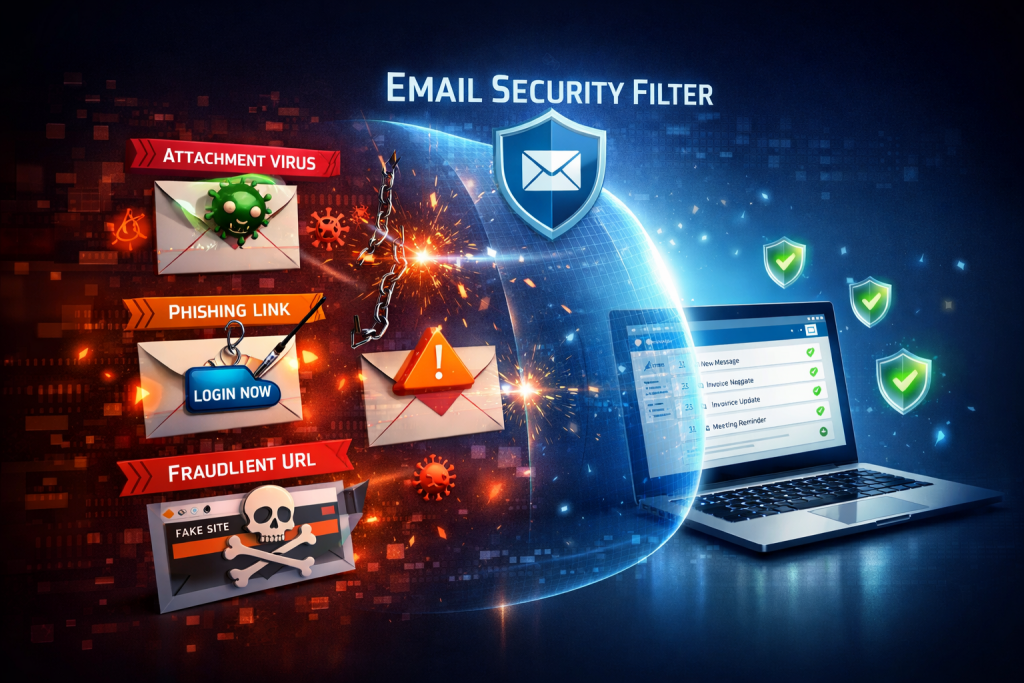
✅ Advanced Email Filtering
Detects phishing, spoofing, and impersonation attempts
✅ Security Awareness Training
Teaches users how to identify and report threats
✅ Conditional Access Policies
Restricts risky logins based on behavior and location
✅ Monitoring & Alerts
Identifies suspicious activity in real time
✅ Clear Internal Policies
Defines how financial requests and sensitive data are handled
Email security is no longer a tool—it’s a system of controls working together.
How to Reduce Email Risk in Your Firm
If you want to improve your email security posture:
- Enforce MFA on All Email Accounts
No exceptions - Upgrade Filtering Capabilities
Move beyond basic spam protection - Train Your Team Regularly
Simulate phishing and reinforce awareness - Implement Verification Policies
Require confirmation for:- Wire transfers
- Sensitive data requests
- Monitor and Respond
Detect and act on suspicious behavior quickly
Who This Applies To
This applies directly to:
- Financial advisors
- CPA firms
- Wealth management firms
- Tax and bookkeeping firms
If your firm uses email to communicate with clients—you are a target.
Download the Full Guide
Email security is just one of the 12 critical cybersecurity controls your firm should have in place.
👉 Download: “12 Cybersecurity Controls Every Financial Firm Must Have in 2026”
Inside, you’ll get:
- A full checklist
- Common gaps we see in financial firms
- A simple way to assess your current risk
🔚 Closing Thought
Most cyberattacks don’t start with advanced hacking.
They start with:
A single email that looked legitimate.
In 2026, that’s all it takes.