
Introduction
Most cybersecurity incidents don’t happen because someone gets access…
They happen because they get too much access.
That’s why least privilege access is a critical cybersecurity control for financial firms in 2026.
👉 Users should only have access to what they need—and nothing more.
What Is Least Privilege Access?
Least privilege is a security principle where:
- Users are given only the access required to perform their job
- Permissions are limited, controlled, and reviewed regularly
Instead of broad access:
👉 Access is intentional and restricted
Think of it like this:
Just because someone works in the building doesn’t mean they need keys to every room.
Why Least Privilege Matters for Financial Firms
Financial firms manage:
- Sensitive client data
- Financial systems
- Confidential communications
Without proper access control:
👉 One compromised account can expose everything.
The Real Risk: Overexposed Accounts
When users have excessive access:
- Attackers can move freely
- Sensitive data is easily accessed
- Damage spreads quickly
The more access an account has, the more damage it can do when compromised.
What Happens Without Least Privilege
In environments without proper access control:
- Employees have access they don’t need
- Former employees may still have access
- Admin privileges are too widely distributed
Real-World Impact
This can lead to:
- Data exposure
- Unauthorized changes
- Increased breach impact
A single compromised account becomes a major incident.
What Most Financial Firms Get Wrong
Most firms:
👉 Grant access once—and never revisit it.
Common issues include:
❌ Too many users with admin rights
❌ No regular access reviews
❌ Shared or generic accounts
❌ No separation of duties
The Biggest Misconception
“We trust our employees.”
Trust isn’t the issue.
Security is about limiting exposure—even when trust exists.
What “Good” Least Privilege Looks Like in 2026
A properly implemented least privilege model includes:
✅ Role-Based Access
Permissions are assigned based on job function
✅ Minimal Access by Default
Users start with limited access and expand only as needed
✅ Regular Access Reviews
Permissions are reviewed and adjusted periodically
✅ Separation of Duties
Critical functions require multiple roles or approvals
✅ Removal of Unused Access
Inactive or unnecessary permissions are removed
Access is controlled, monitored, and continuously refined.
How to Implement Least Privilege
If your firm wants to improve access control:
- Audit Current Access
Identify who has access to what
- Define Roles
Group access based on job responsibilities
- Reduce Excess Permissions
Remove unnecessary access
- Implement Review Processes
Regularly evaluate and adjust permissions
- Monitor Activity
Track access and detect anomalies
Who This Applies To
This applies directly to:
- Financial advisors
- CPA firms
- Wealth management firms
- Tax and bookkeeping firms
If your team accesses client data or financial systems, least privilege is essential.
Download the Full Guide
Least privilege is one of the 12 cybersecurity controls your firm should have in place.
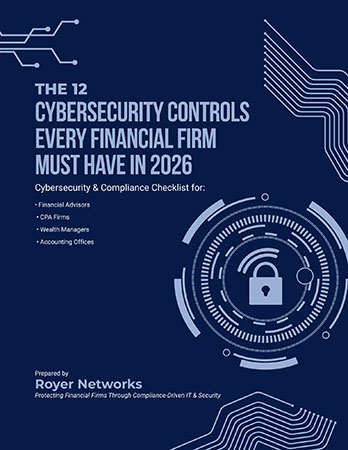
👉 Download: “12 Cybersecurity Controls Every Financial Firm Must Have in 2026”
Inside, you’ll get:
- A full checklist
- Common gaps we see in financial firms
- A simple way to assess your current risk
🔚 Closing Thought
Cybersecurity isn’t just about keeping people out.
It’s about limiting what they can do if they get in.
Least privilege is how you control that risk.