
Introduction
A Written Information Security Plan (WISP) is not optional for financial firms in 2026.
It is a required cybersecurity control under regulations like the FTC Safeguards Rule—and one of the first things auditors, regulators, and cyber insurance providers will ask for.
If your firm does not have a documented, enforceable WISP, you don’t just have a gap…
👉 You have a compliance risk and a liability issue
What Is a Written Information Security Plan (WISP)?
A WISP is a formal, documented plan that outlines how your firm:
- Protects sensitive data
- Manages cybersecurity risks
- Enforces security policies
- Responds to incidents
Think of it as:
The blueprint that proves your firm takes cybersecurity seriously—and can back it up.
What a WISP Typically Includes
A properly structured WISP should define:
- Risk assessment processes
- Access control policies
- Data protection measures
- Employee training requirements
- Vendor management procedures
- Incident response planning
- Ongoing monitoring and review
It’s not just a document—it’s a framework for how your firm operates securely.
Why Financial Firms Need a WISP
Financial firms handle highly sensitive data:
- Client financial records
- Personally identifiable information (PII)
- Account access and transaction data
Because of this, regulators require firms to:
👉 Identify risks
👉 Implement safeguards
👉 Document and enforce those safeguards
Regulatory Expectations
Under the FTC Safeguards Rule and similar standards:
- A WISP is required—not recommended
- Firms must designate responsible individuals
- Security controls must be documented and maintained
Cyber Insurance Expectations
Insurance providers increasingly require:
- Proof of policies
- Documentation of controls
- Evidence of enforcement
No WISP often means:
- Higher premiums
- Limited coverage
- Or denied claims
What Most Financial Firms Get Wrong
Most firms fall into one of these categories:
❌ They Don’t Have a WISP at All
They assume IT tools cover them
❌ They Have a Template Sitting on a Shelf
Generic, outdated, and not tied to their environment
❌ It’s Not Enforced
Policies exist—but no one follows or monitors them
❌ No Ownership
No assigned responsibility for maintaining the plan
A WISP that isn’t enforced is just paperwork—and it won’t protect you in an audit or a breach.
What “Good” Looks Like in 2026
A properly implemented WISP is:
✅ Customized to Your Firm
Reflects your actual systems, risks, and workflows
✅ Actively Maintained
Updated regularly as your environment changes
✅ Enforced Across the Organization
Policies are applied consistently—not optionally
✅ Assigned Ownership
A designated individual is responsible for oversight
✅ Backed by Evidence
You can show:
- Logs
- Reports
- Training records
- Policy enforcement
In other words—you don’t just have a plan. You can prove it’s working.
How to Build or Fix Your WISP
If your firm doesn’t have a WISP—or isn’t confident in it—start here:
- Conduct a Risk Assessment
Identify where your biggest exposures are - Document Your Policies
Access control, data handling, incident response, etc. - Align Controls to Real Systems
Tie policies to actual tools and processes - Assign Ownership
Someone must be accountable - Implement Monitoring & Review
Ensure policies are enforced and updated regularly
Who This Applies To
This applies directly to:
- Financial advisors
- CPA firms
- Wealth management firms
- Tax and bookkeeping firms
If your firm handles sensitive financial data, a WISP is required.
Download the Full Guide
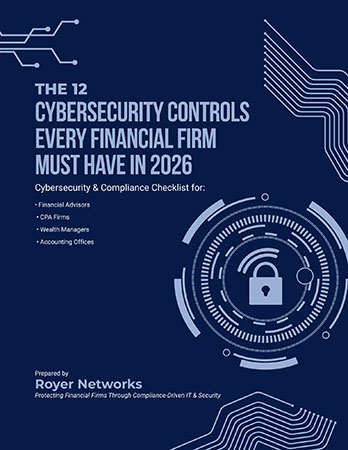
A WISP is just one of the 12 cybersecurity controls your firm should have in place.
👉 Download: “12 Cybersecurity Controls Every Financial Firm Must Have in 2026”
Inside, you’ll get:
- A full checklist
- Common gaps we see in financial firms
- A simple way to assess your current risk
🔚 Closing Thought
Cybersecurity is no longer about what you have installed.
It’s about what you can prove.
And your WISP is where that proof starts.